

Slings are great tools for carrying small and big babies alike and there are many, many benefits to it. It’s not only very practical, making traveling easier and enabling parents to be hands-free to attend to their tasks care for older siblings, but they also help promote bonding with the closeness, help re-build core strength for the mother and promotes responsive parenting.
Navigating the over-saturated market of slings and carriers can be overwhelming for novice parents. There are many types, many brands and not all slings suit all bodyshapes; some are not newborn friendly or safe. Sling libraries are a great space where parents can get professional advice from trained and experienced sling consultants who will guide them to find the best option for them, fit check their own sling and show them how to safely babywear.
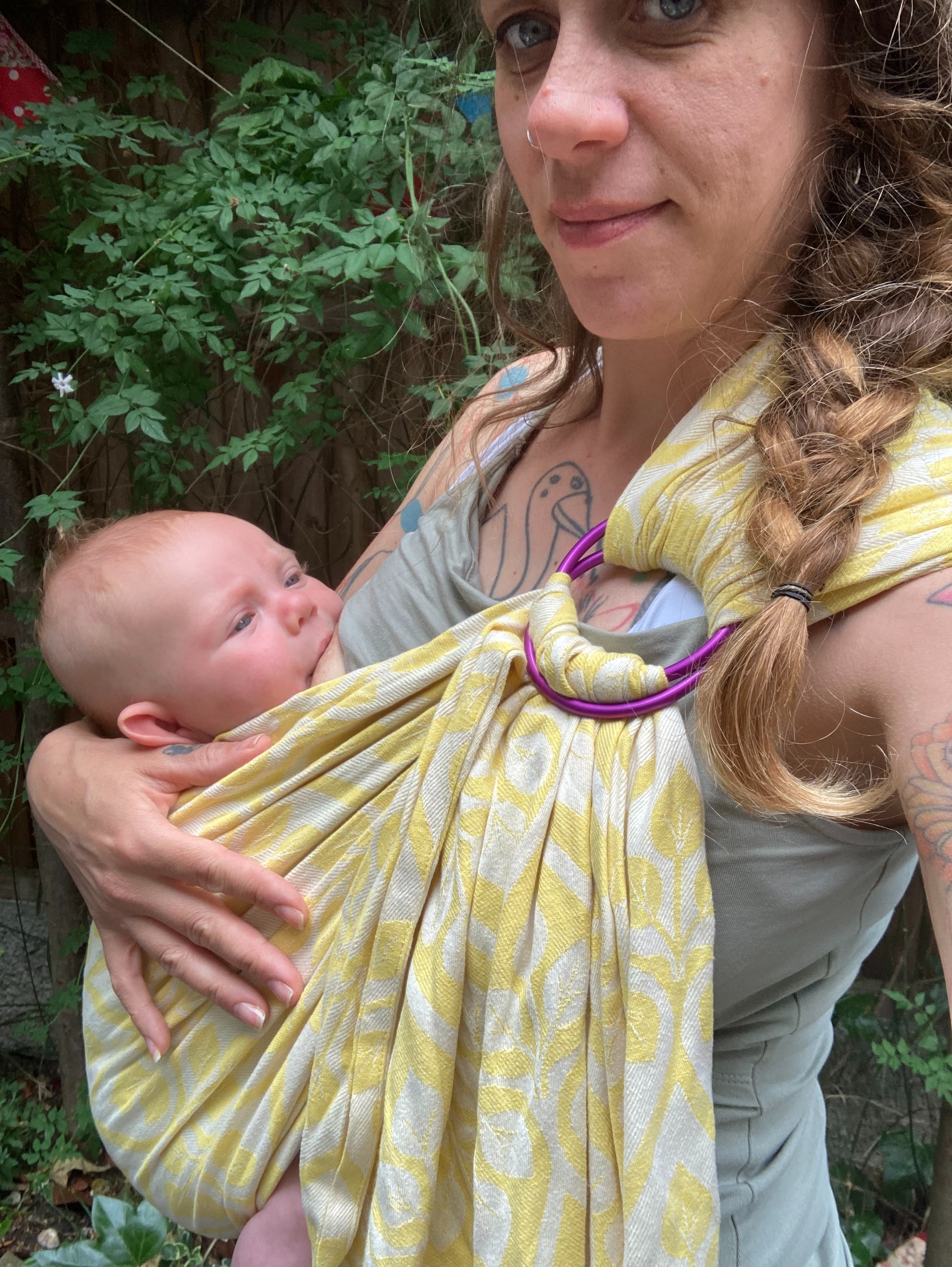
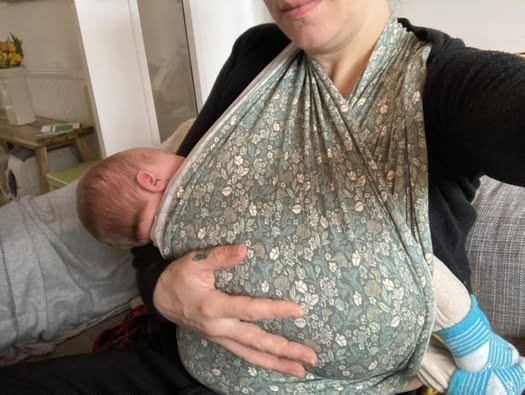
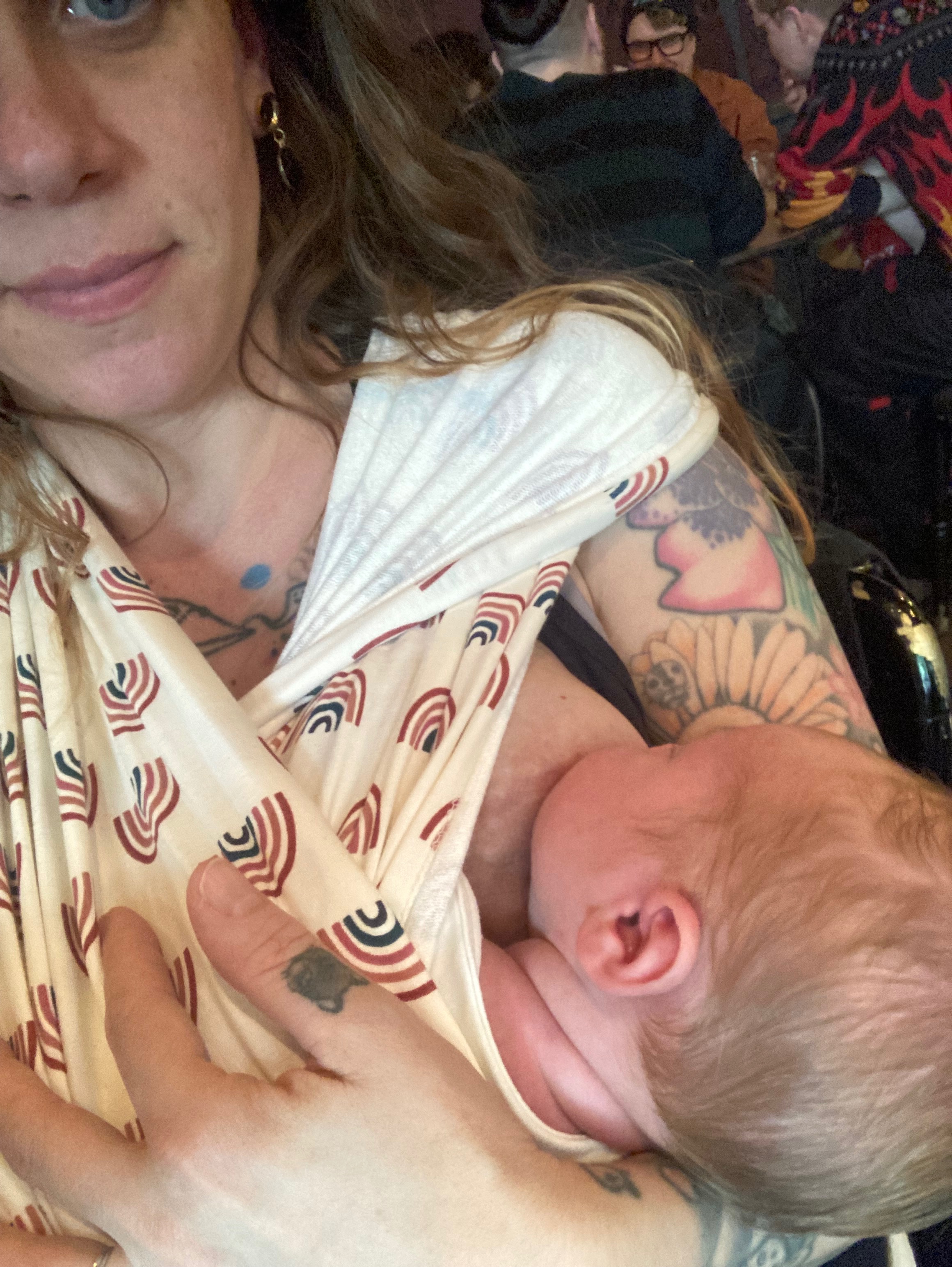
Slings are also a great tool to support breastfeeding. There are many benefits to using a sling when feeding baby. A sling can make breastfeeding on the go much easier, supporting baby’s weight when the mother can’t find somewhere to sit down or needs to keep moving, but also at home as it can relieve some of the weight breastfeeding can place on the shoulders, arms or wrists. They can also be used to support tandem feeding.
Feeding in slings can also help baby settle in the sling. We often see small babies who will cry in the sling and won’t settle. More than often, this is due to them getting mixed signals when being put in the sling whereby the closeness to the breast can make them think they are about to get fed but instead are being carried. Breastfeeding in the sling can help reassure them that the breast is available and promotes feeding on demand in return.
It can also help babies with reflux whereby they will be carried upright after a feed or can be fed in an upright position before being returned to a carrying position. We always advice parents to make sure baby is winded before re-tightening the sling as this can put a bit of pressure on their stomach and cause some discomfort.
Slings can support breastfeeding in upright, cradle/cross-cradle positions or even in a rugby hold. It’s worth noting that not all slings can easily support all breastfeeding positions and some are not breast-feeding friendly at all, so it’s important to get support to find the best option for you. For example, a ringsling can support feeding in a variety of positions while some buckle carriers that have a part of a harness between the mother’s and the baby’s chests will not make access to the breast easy (e.g., Baby Bjorn carriers).
Size of breast, preferred position for latching, any mobility restrictions or health conditions need to be considered when choosing the best sling option to support breastfeeding in slings. For instance, if the mother needs to always feed in an upright position and she needs to lower baby significantly to bring them to nipple height, a stretchy wrap might not be the best option for this situation as it will likely need to be loosened and then re-tightened after feeding which is a bit tricky without completely taking baby out. A ringsling or carrier with cross-straps might work better in this instance.
A simple scarf can also be used to support breastfeeding if the parent doesn’t use slings and there are many ways to use it in different positions.
It’s important to remember that every breastfeeding dyad and every situation is unique, meaning that a sling that works well for carrying baby might not necessarily be the best option to support breastfeeding, so it’s worth exploring a few options with some professional support!
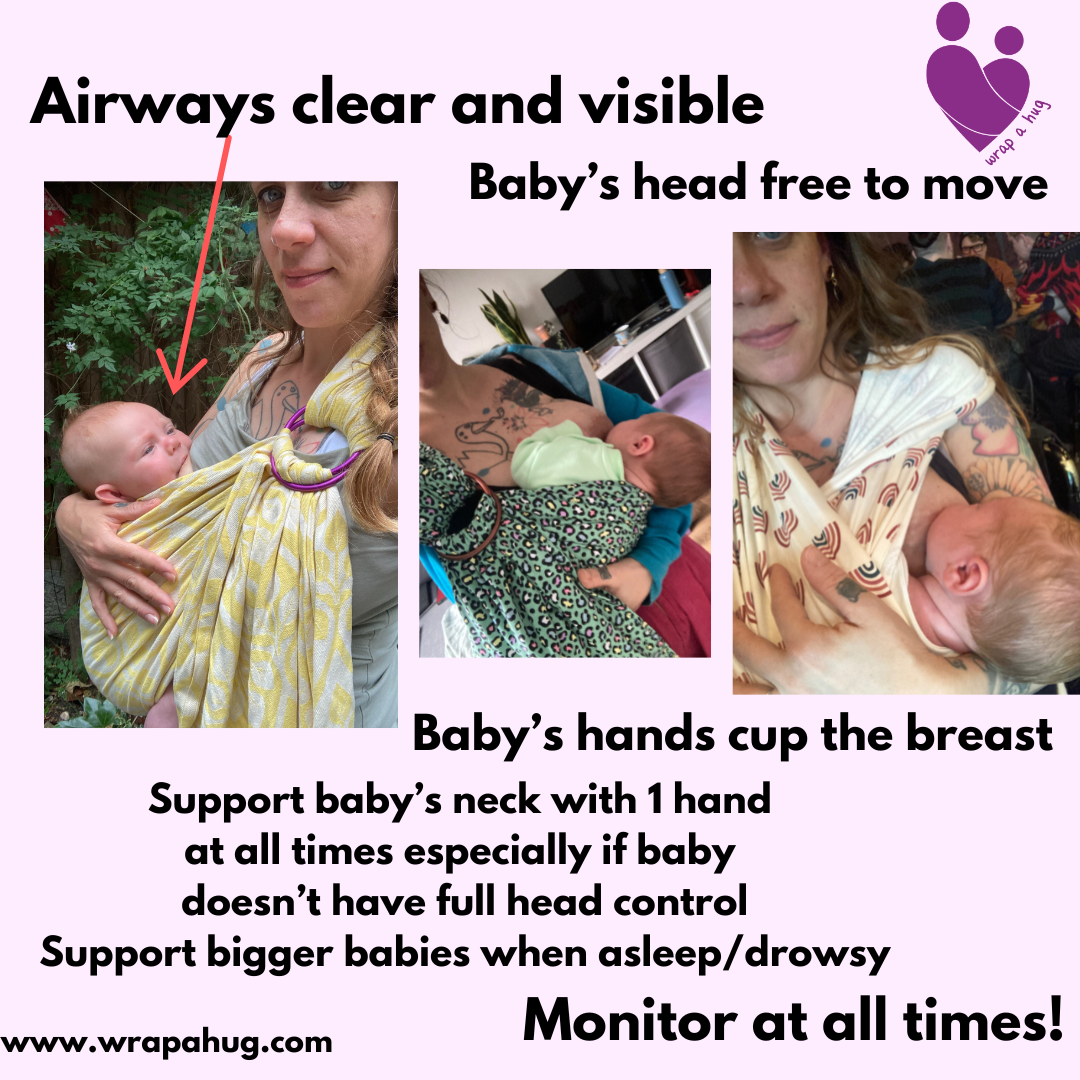
Safety when carrying baby in a sling is extremely important. All parents need to learn how to safely babywear and seek support if they are unsure how to do so.
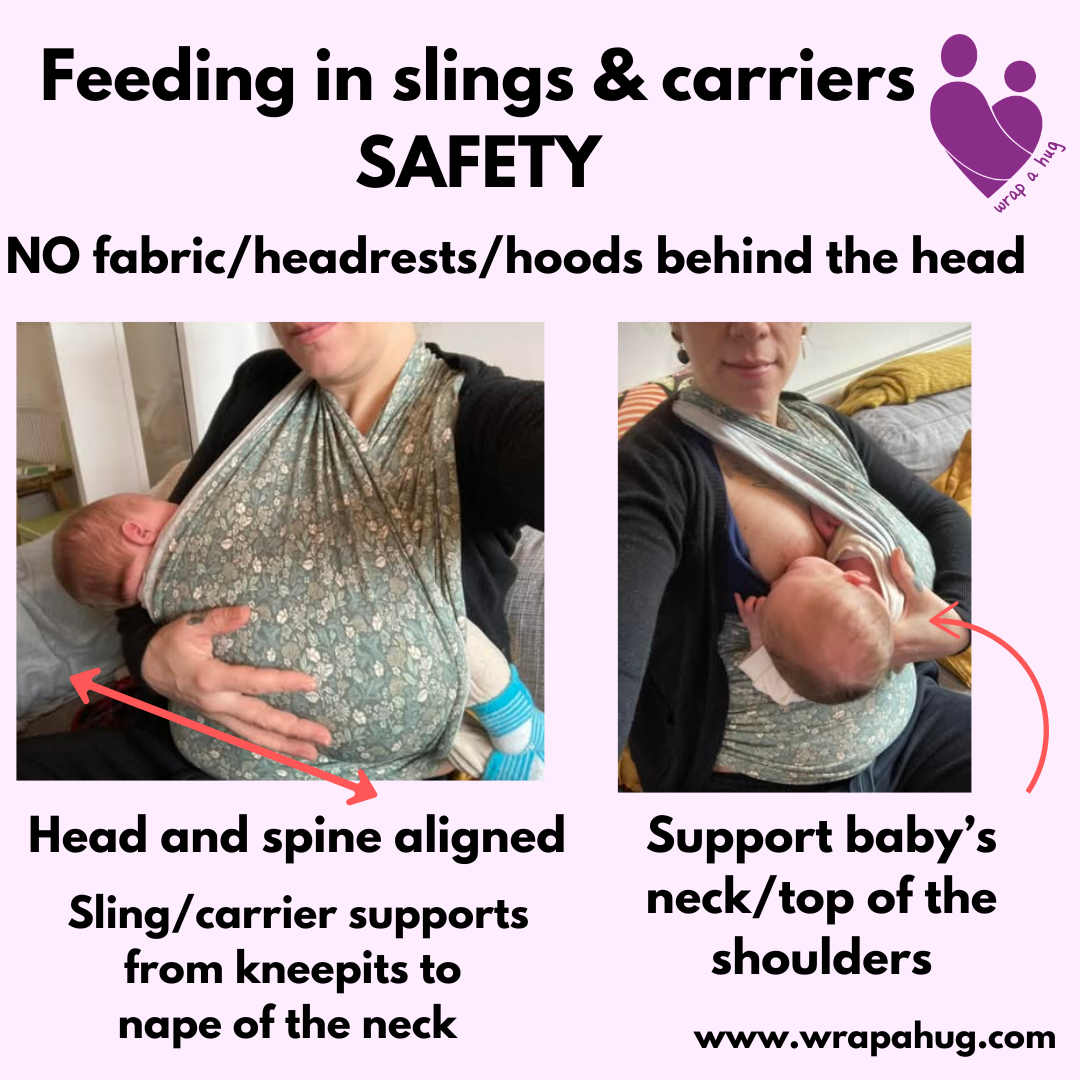
There are also safety and optimum positioning guidelines to follow when feeding in slings that are very much similar and applicable to breastfeeding in arms:
- Fabric: Baby needs to be supported by fabric from their neck/top of the shoulders to their kneepits. This helps support the baby’s weight, ensure baby’s body is aligned.
- Head free: Baby’s head needs to remain free from fabric to allow baby to unlatch easily, to prevent their nose becoming pressed against the breast, to avoid slumping, to allow for good airflow and to help monitor baby more easily. There should be no fabric, panel, hoods or headrests behind baby’s head when feeding.
- 1 hand-free: the parent needs to support’s baby’s neck with 1 hand or arm at all times. The other hand can be left free, used to lift/cup the breast if needed or used in a cross-cradle feeding position. The parent needs to continue supporting baby’s neck for babies with no or little head control. For older babies with complete head control, we recommend supporting baby’s neck should they become drowsy or fall asleep or support when needed. A baby should never slump on the breast.
- Airways clear: Baby’s nose must be clear and visible at all times and not become pressed against the breast
- Alignment: much like when breastfeeding in arms, baby’s head and spine should remain aligned. Baby’s hands cup the breast so they can push back to unlatch easily.
- Monitor: The parent must monitor their baby at all times, ensure that airways are always clear and visible and that baby is well-supported
- Upright: When baby has finished feeding, they need to be put back in the sling in the upright position if they were being fed in cradle position. If they were fed in a koala position and were lowered to nose-to-nipple height, they will need to be returned to ‘close enough to kiss the top of the head’ height and the sling re-tightened.
Breastfeeding in slings takes some practice and is a learning curve. Not all manage to achieve this skill straight away and it can time. Learning to use a sling and getting confident with breastfeeding are two separate skills that already need some mastering, so combining the two can take time to learn. Be gentle with yourself.

