

(well, I tried to keep it concise!)
Choosing a buckle carrier (also called ‘soft structured carrier’, ‘baby carrier’, ‘carrier’ for short or ‘one of them clippey carriers’) is tricky business. There are sooooo many types and brands, all offering something different and all claiming to be ‘the best’. The baby market is flooded with buckle carriers and it’s hard to choose or even know what’s safe. So here’s my little blog, or more a ‘guide’, to help you on this journey! I have tried to keep it as short as possible! if you want a very thorough guide, read this blog instead. If reading isn’t your thing, here’s a video with demos that covers most of what I talk about in this blog
Before I delved into how carriers differ, the most important thing to remember is that not all buckle carriers fit everybody and every body shape or every baby from birth even if your baby is within the lower weight limit. This is why it’s super-mega-important (and I’m not even exaggerating!) to try a few carriers on before you buy. Some people like very structured carriers with lumbar support and very padded straps, while others will prefer something more lightweight with a thin waistbelt and spreadable straps. Often both parents won’t like the same one (please don’t argue over that, it’s not my fault!). Slings and especially carriers are like shoes, very personal, not everyone is a stiletto fan, not everyone likes flip-flops, I like trainers.
Pretty much every other parent who carries their baby will want to recommend or give you the carrier they used because they like it and think it’s the best (often, many of those parents have likely not tried other carriers on so have no comparison point). It’s almost a right of passage, somebody will give a carrier. If ti works for you, great but it’s worth also making your own mind up by trying a variety on. Also remember: marketing plays a massive role in what baby products people will buy. New parents are often clueless as to what brand or product to buy before their baby arrives, and just go with what everyone else has. Main baby shops have big money contracts to stock the biggest brands because those brands have a big budget for marketing and putting themselves out there. You’d be surprised to know the most popular carriers at the sling library are brands you’ve probably never heard off, and, bonus points, they’re a lot cheaper than the big brands (think about all the coffee you could buy!).
I have countless parents coming to see me with their pretty expensive, very bulky carrier they bought at a main baby shop, in pain, because their carrier don’t fit their body shape or they find it uncomfortable, or worse, their baby is too small for it and is carried in an unsafe position because that’s what the salesperson showed them and it says on the box ‘from newborn’. Well, a newborn can weight 2.5kgs and will very likely be too small for a carrier at the beginning. So skip the recommendations, come see us! You can see all the carriers I have in my library here
The market is saturated with carriers that all offer something different, but it can be quite confusing and overwhelming when it comes to choosing. So let me highlight the main differences between carriers for you. Grab a cuppa and let’s dive in!
Lightweight vs bulky carriers
One way to compare carriers is in terms of structure, and this is important to consider when factoring in the size of your baby and your body shape.
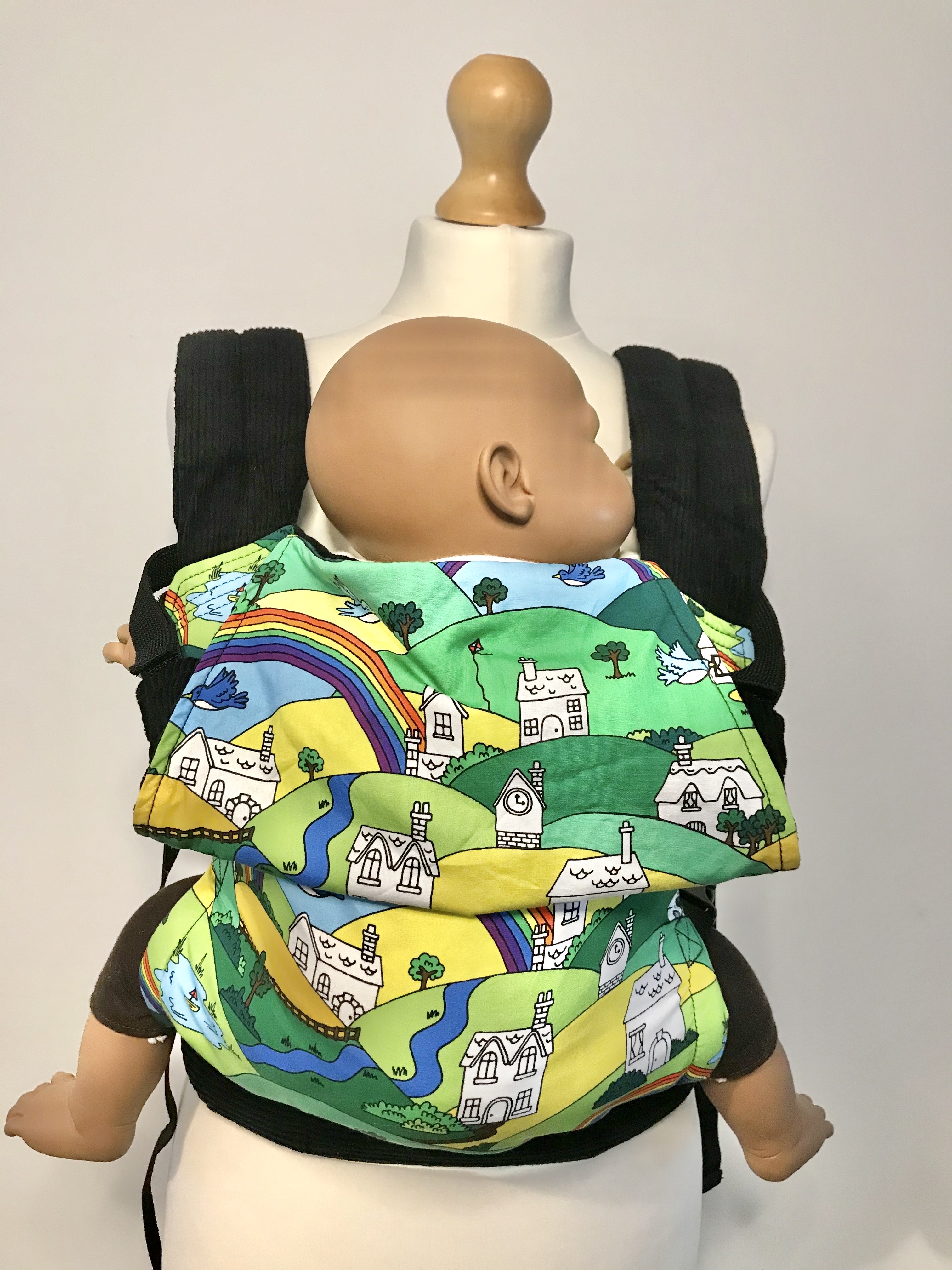
Lightweight carriers have soft and mouldable panels/straps/waistbelts that offer a fit that is closer to that of a wrap. They a simple panel that is adjustable in height and in width. Some are stretchy hybrid carriers that are made of a stretchy wrap-like material such as the Mamaruga Zensling, Boba Bliss or Ergo Embrace, others are made of canvas cotton (e.g., Izmi, Kahubaby, Integra, Marsupi). Those types carriers generally give a snugglier fit and work particularly well for small babies and small body shapes compared bulkier carriers. We can often fit a newborn or small baby in a lightweight carrier. Some may not feel as supportive as a bigger, bulkier carrier for bigger babies and you may have to switch carriers if that happens, but this is very personal (it always is!).
Bulky carriers are generally quite structured with harder or more padded panels, some have systems to offer the facing out carrying position (you will need some structure to allow for this position) and often have bigger waistbelts (to read more about waistbelts, head over to my complete guide). Some are very hard across the back (e.g., Stokkee, some Baby Bjorns). I usually recommend against very hard panels (some even have a metal in the panel!). You want to try and respect the natural C-shape curve of your baby’s spine and this can be nicely achieved with a soft-pannelled carrier. This allows them to sit in their natural position and thus support their own head better and their keep their airways clear more easily, especially when they are very small.

It can be tricky to get a good fit with a carrier that has a hard panel as the baby can end up being carried in a more upright position, making it harder to respect their natural sitting position. If you can ‘knock’ on the front panel, I recommend you steer clear of that carrier, especially for a young baby!

Here’s an idea: hold your baby in arms in their natural position on your chest. Look in the mirror. Observe their positioning. You want to have a carrier that respect their natural positioning as much as possible.
Bulkier carriers can feel more supportive than lightweight ones especially for bigger babies. Again, it’s a personal preference (I’m going to say that a lot in this blog so you get the idea!)
Adaptable vs. non-adaptable carriers
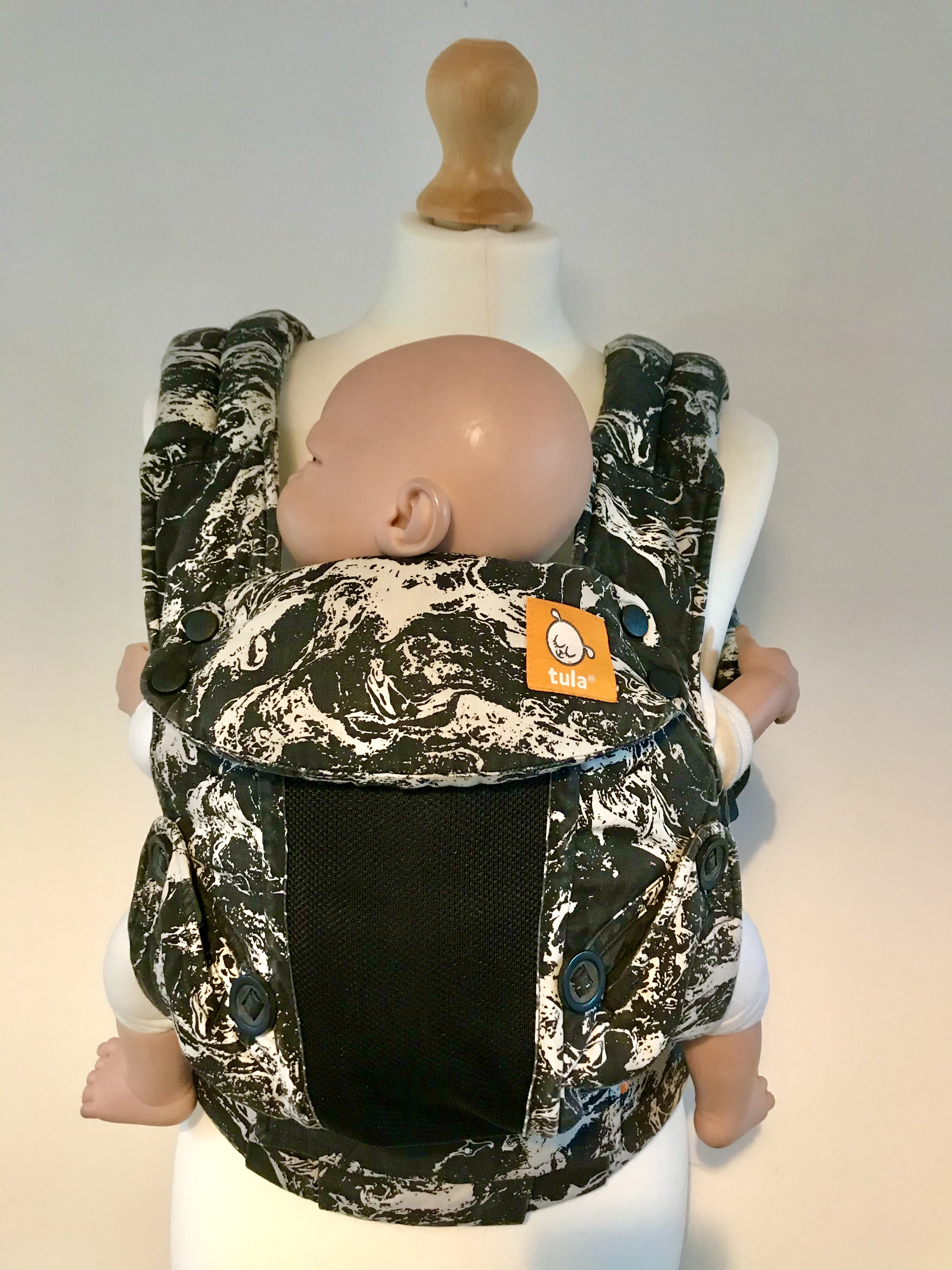
Carriers differ in terms of adaptable they are. An adaptable carrier grows with your baby, more or less gradually. It will support your baby at the base from knee-to-knee and can be made progressively wider to preserve the M-shape positioning. Some have 2-3 settings (e.g., Beco Gemini, Beco 8, Tula Explore, Tula Free to Grow, Ergo Omni 360 – left pic-, Ergo Adapt, Izmi), some are ‘micro-adjustable’ meaning you can make slow and progressive adjustments as your baby grows, (e.g. Hana Expand, Mamaruga Zensling, Zebulo -right pic-, Boba X).


Some are adjusted by rolling the base and synching it (e.g., Connecta/Integra-left pics, Ergo Embrace -right pics, Kahubaby)

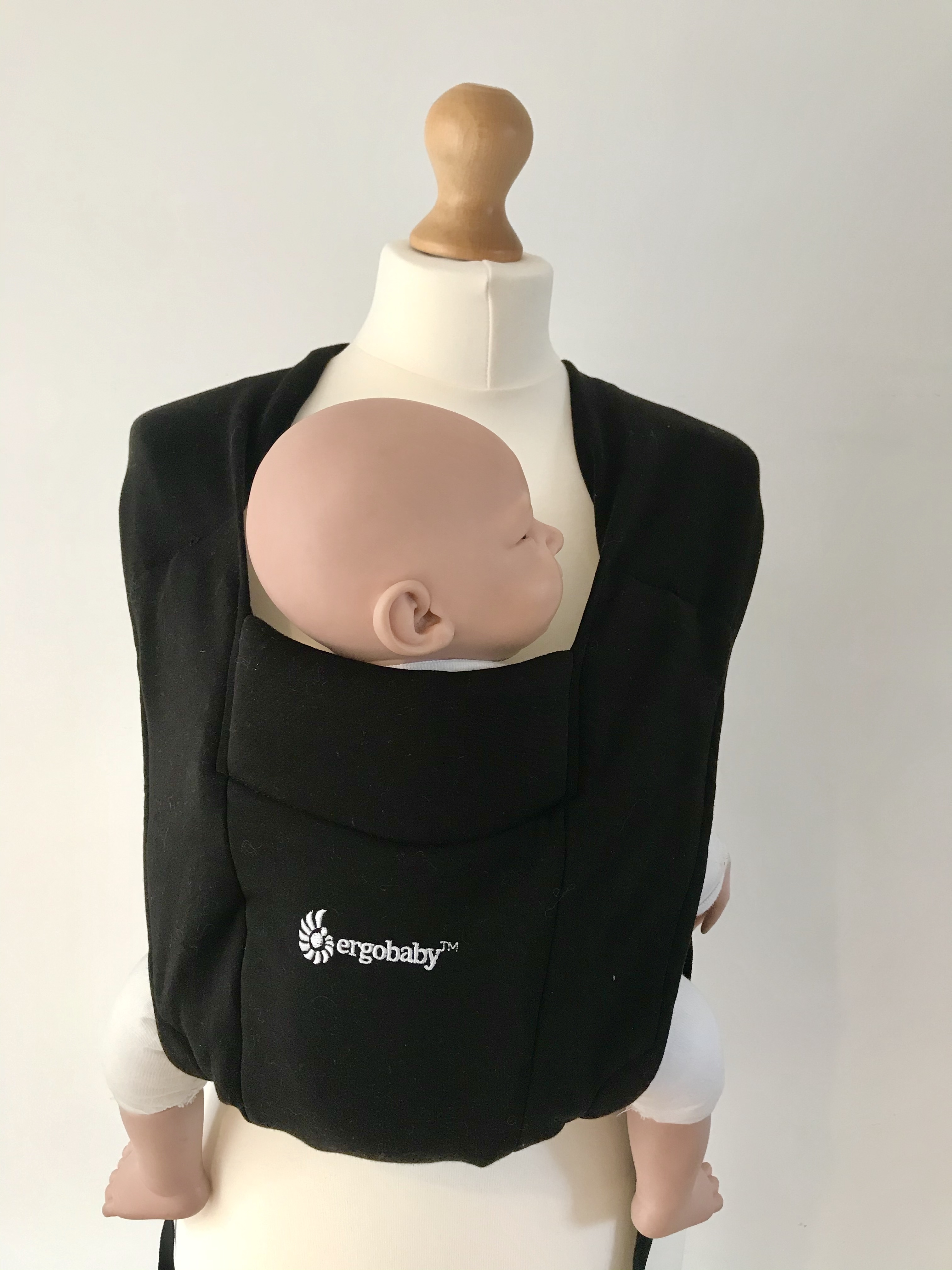
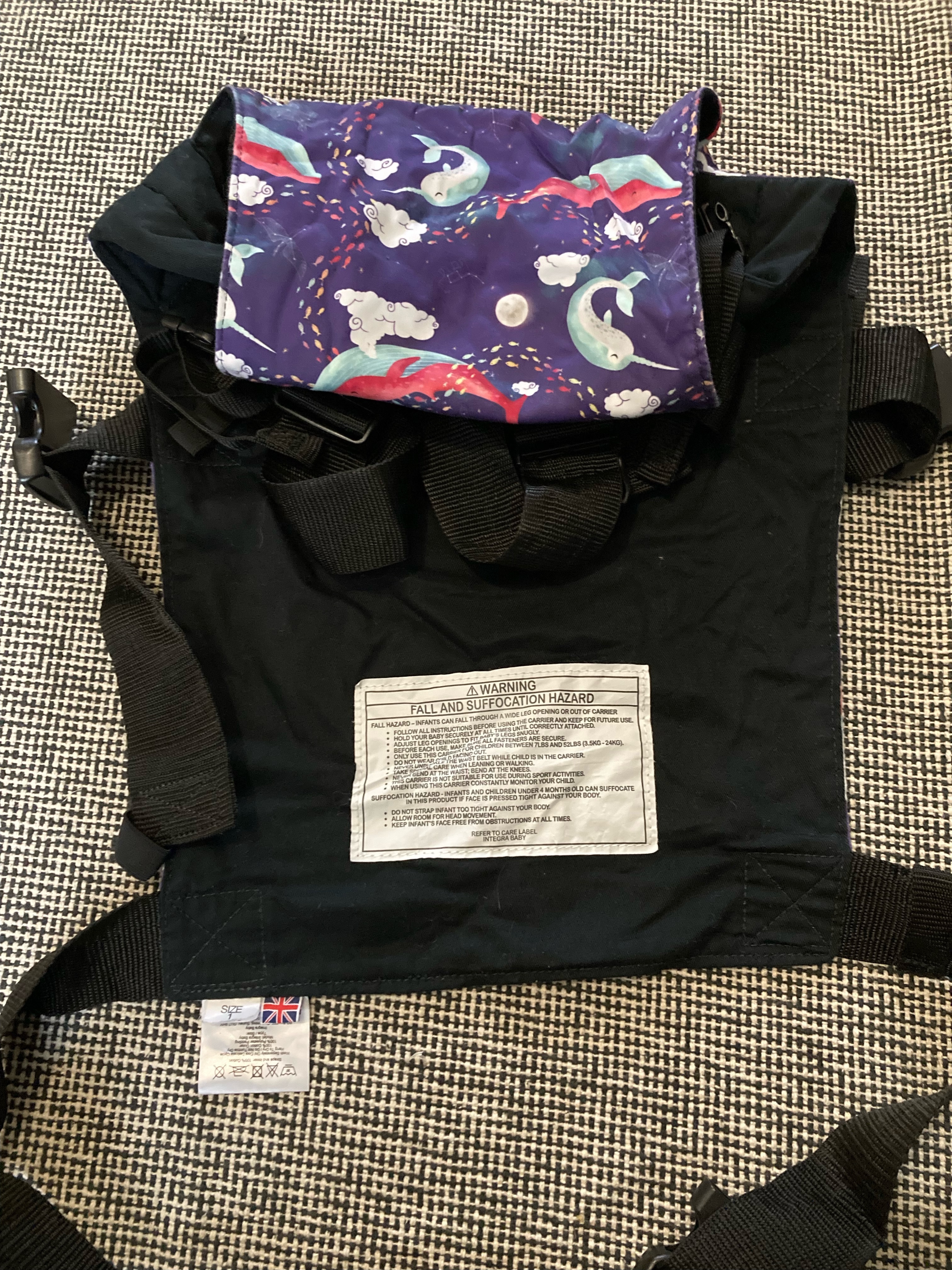

Adaptable carriers also grows in height by either expanding the front panel or bringing the headrest up (more about that in my other blog).
A non-adaptable carrier has a base that you can’t adjust; it’s one size (e.g., Ergo All Positions 360 – pic below- Tula Standard, Beco Carrier) and will either need to be used with a newborn insert which is like a little cushion to place your baby in, or can only be used once your baby can fit the carrier without over-spreading the legs and hips (e.g., Sleepy Nico). The insert can make the carrier feel heavier, bulkier and warmer, and make fitting the baby in the carrier quite awkward, especially if it’s one that fills up the whole carrier (e.g., the inserts for the Ergo All Positions and Original, see pic below) (see my demo video here).

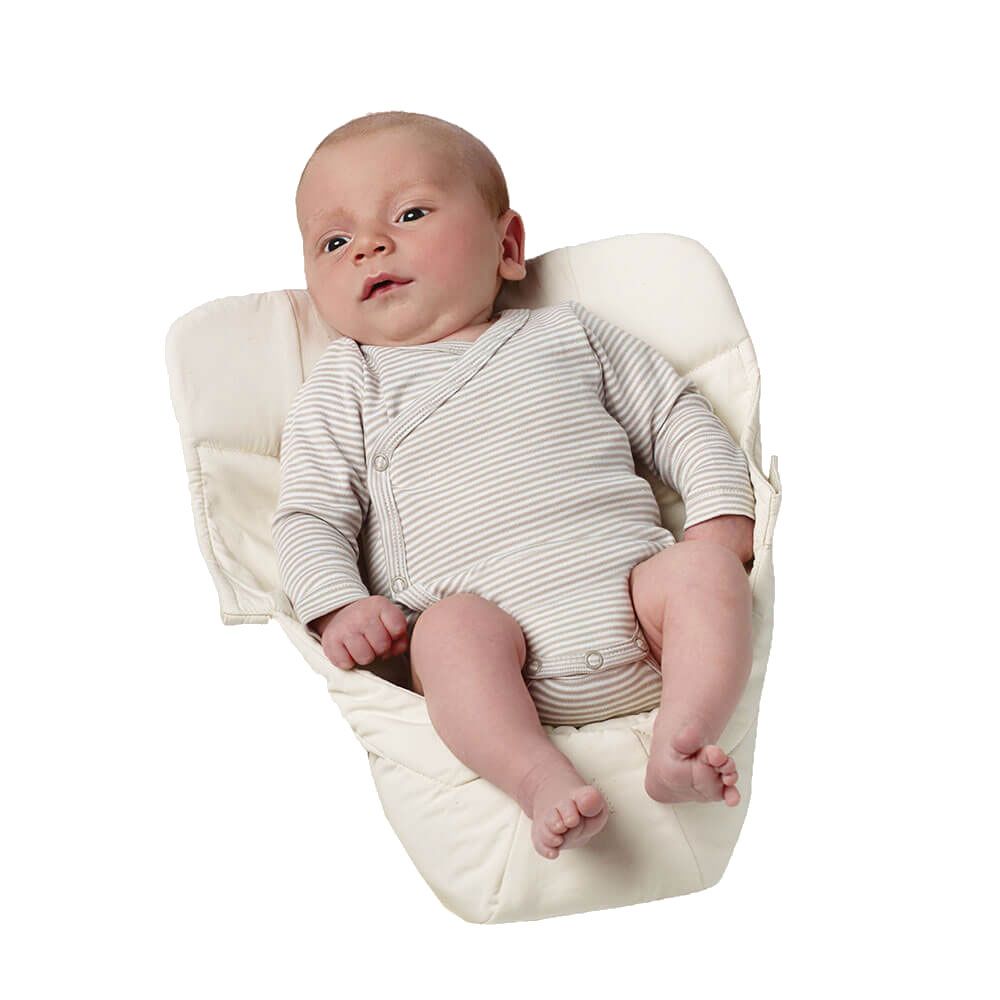
Adaptable carriers that grow in width and height with your baby generally give a snugglier, better fit and respect your baby’s hip opening more easily compared to a non-adaptable carrier. You want to try as much as possible to not over-spread your baby’s hip to fit them in a carrier. The carrier should fit around your baby and not the other way around. I always recommend you choose an adaptable carrier or to use a 1-size carrier once baby doesn’t need the insert. Also remember that your baby will eventually move to a toddler carrier usually around the 15-18 months mark (but this varies a lot). More about carrier sizes in my other blog.
Shoulder straps
Carriers come with all sorts of shoulder straps. Again, the way you feel they support your baby’s weight and the comfort they offer is very personal.
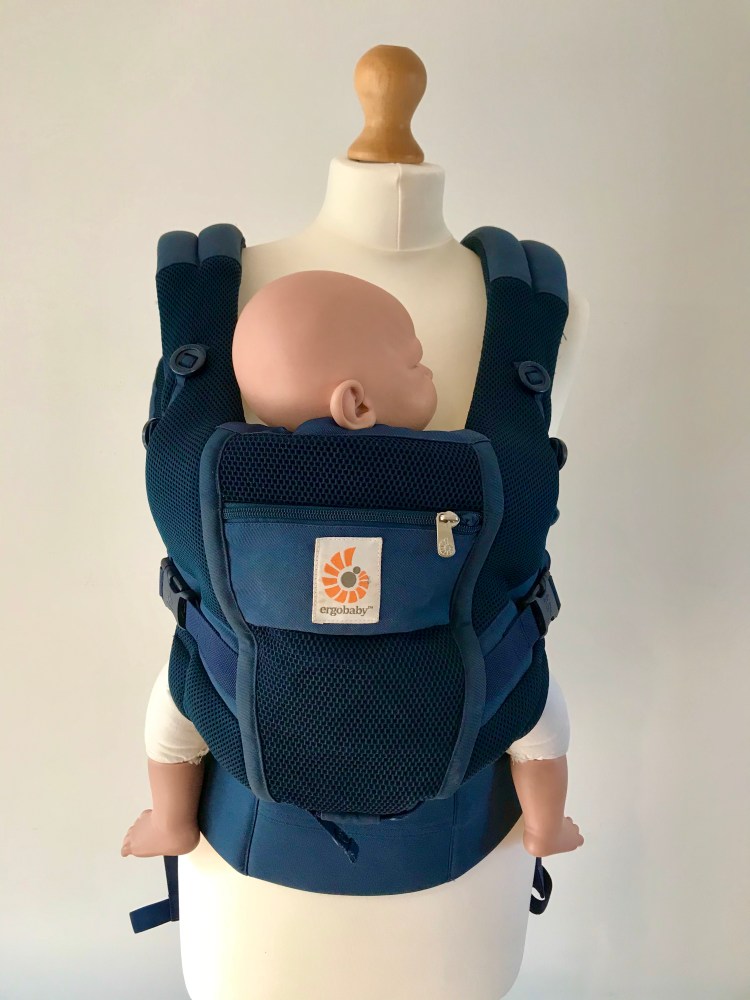
Some can be very padded and narrow (e.g., Ergo Omni/Adapt- see pic/All Positions, Tulas) which some people prefer as they feel they cushion and support the weight nicely; while for others, they feel very bulky and may not always fit a petite frame quite well (think 80’s shoulder pads!).
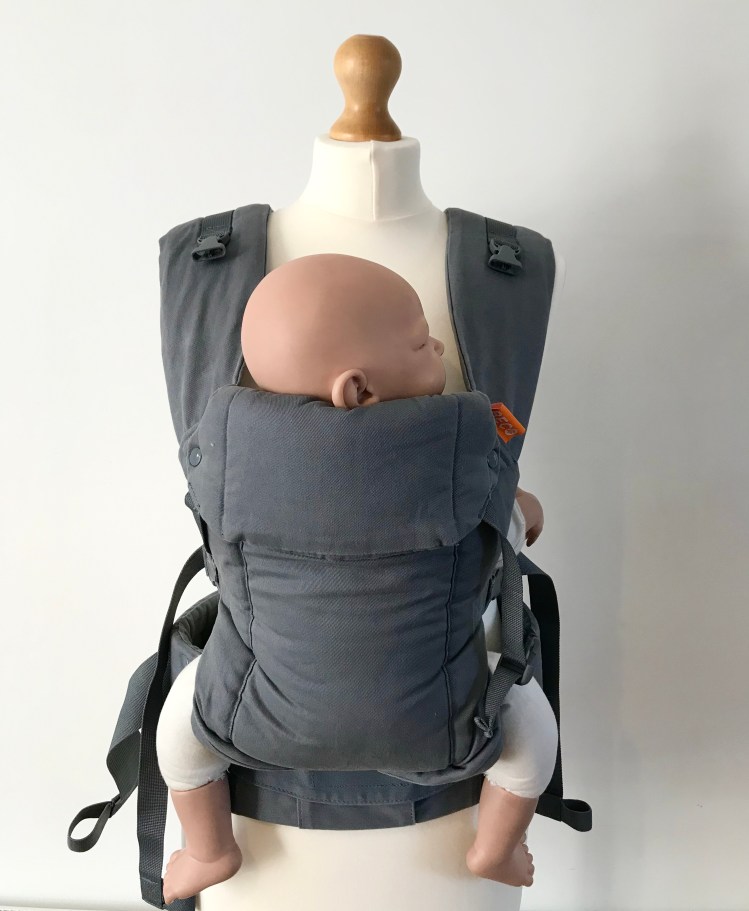
Other straps can have thin padding but with wide straps (e.g., Boba X, Beco Gemini-see pic, Sleepy Nico) which fit most frames (they often fit petite frames better than very padded straps). Some people feel that they spread the weight over the shoulders better and distribute the weight overall more evenly than very padded straps.
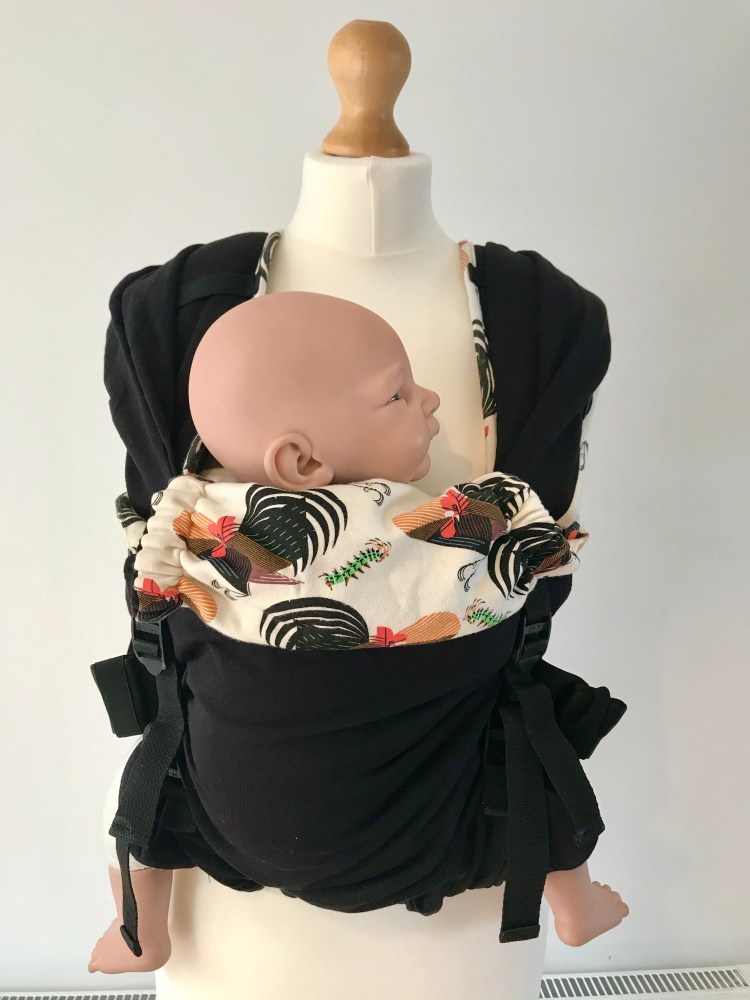
Some straps are spreadable over the shoulder (e..g., Ergo Embrace, Zensling – see pic, Izmi, Boba Bliss). Some people prefer those over padded or narrower straps because they feel they distribute the weight of the baby more evenly across the shoulders.
Some carriers have ‘Perfect Fit Adjusters‘ (‘PFA’s for short, e.g., Boba X – see pic-, Zebulo, Isara The One, Lenny Lamb Upgrade) which is a tightening/loosening adjuster where the shoulder strap meets the top of the panel that allows you to loosen easily to feed baby in the carrier, allow for more padding to go around your shoulders/back, to tighten or loosen your carrier from your front and make a back carry more snuggly if you’ve already pulled the shoulder straps max and the straps are still too loose.
Any carrier that has straps that can be unclipped (e.g, Zensling, Ergo Omni/Adapt, Izmi, Beco Gemini/8…) can be worn with either straight or crossed straps (e.g., Beco Gemini-see pics above). Crossing straps has many advantages: you can get a snugglier fit if the carrier is too loose, some people find that crossing straps support the weight of the baby better, some people don’t like the feel of the chest strap on their back with straight straps, people sharing carriers sometimes like the straps in different positions or have different body shapes, so it’s good to have options, you can do a hip carry (see below) to allow more visibility for baby, or even a torso carry or a seated sideways one.
Carrying Positions
Carriers offer different types of carrying positions and before buying a carrier, I highly recommend you have a good long hard think about what positions you want to carry your baby in because if you suddenly decide you want to carry your baby in a certain position and your carrier doesn’t offer it, you’re screwed, my friend!
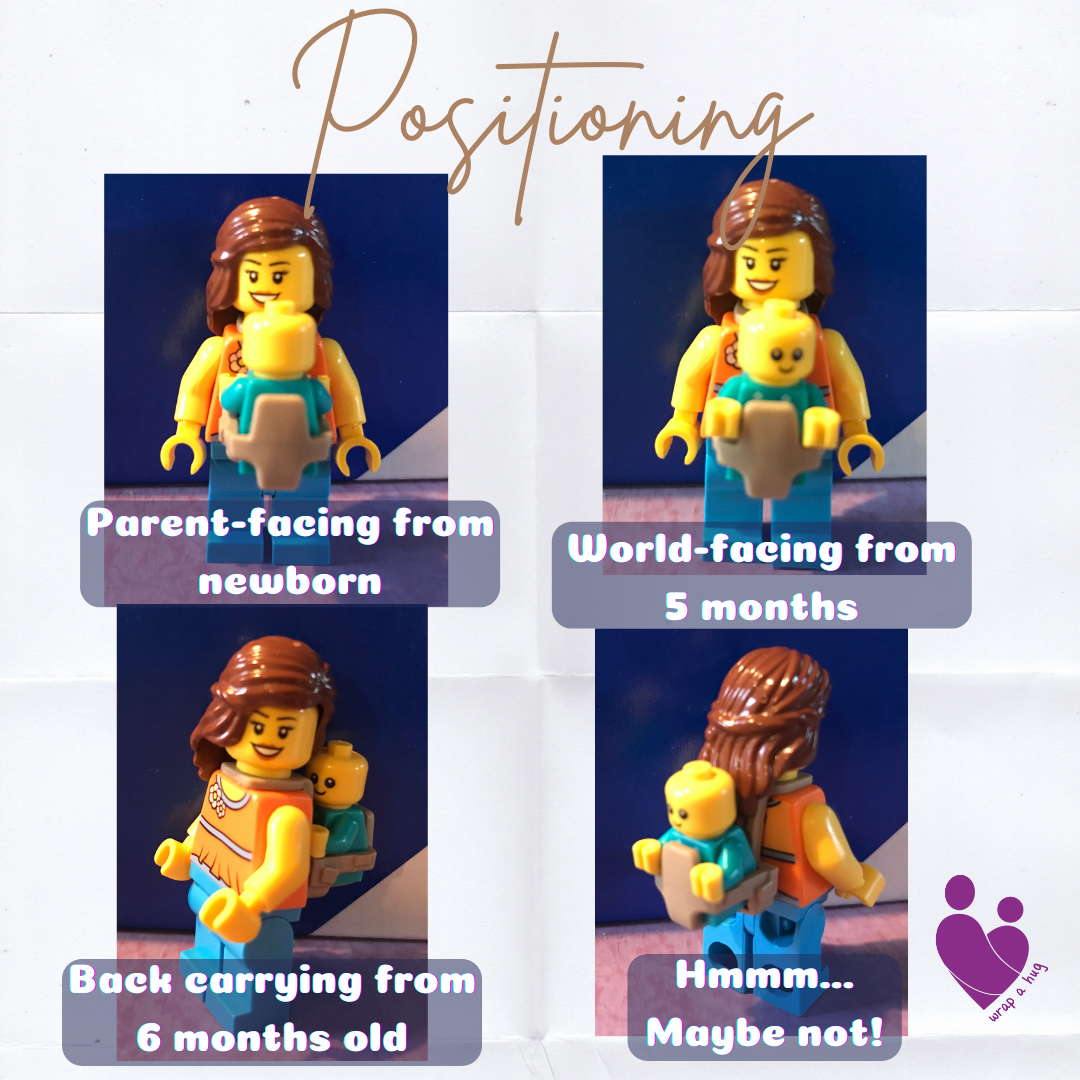


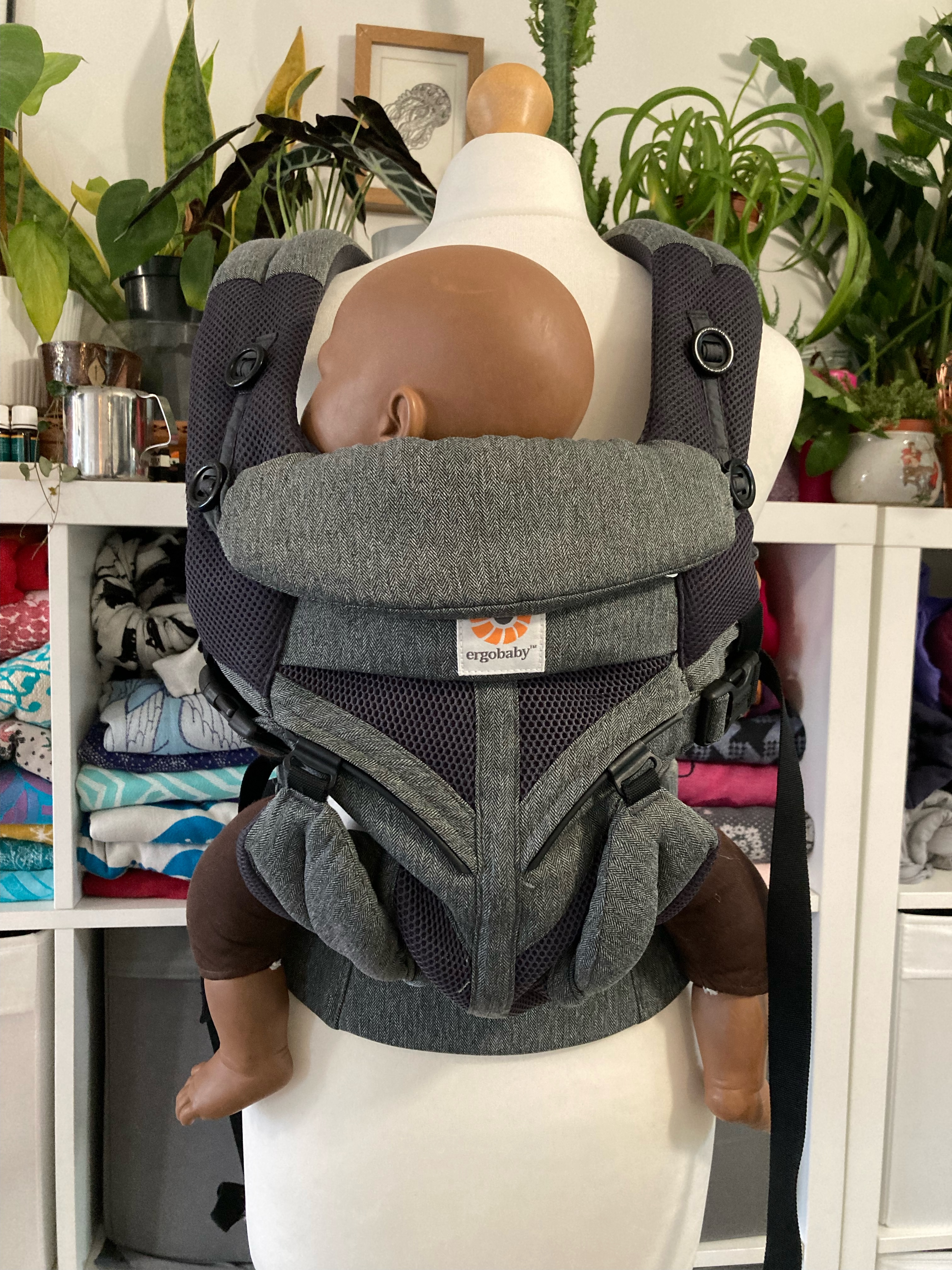
All of them offer the facing-in or ‘parent-facing’ position on your front. This is how you carry your baby from birth until well… forever!! You can carry your baby on your front for as long as you want! There is no obligations ever to start carrying your baby in other positions ( I carried my kids on my front until they were about 4 years-old, alternating with back carrying). This is the snuggliest position that offers prime verbal and visual communication exchanges, and feedback and reassurance for the baby.

The majority of carriers offer a back carrying position (always check the manufacturer’s instructions to see if you can back carry with a carrier), which we recommend doing from around 6 months old when baby has full head control and is tall enough so their faces are visible just above your shoulder so you can monitor their airways the whole time. Before that, it would be hard to bring your baby high enough on your back to monitor them as you can only bring the waistbelt that high on your body! There are different techniques to safely bring baby on your back; you don’t need anybody to assist you. Get professional support to learn some techniques!
Carriers that has straps that can be crossed offer a hip carry positioning option (see above). Hip carrying is handy to offer nosey babies a bit more visibility as this allows them to look around a bit more and moves the shoulder straps away from their vision field. Hip carrying is also handy to feed in and to give your baby more visibility to engage with them in tasks – all those times you’re carrying your baby on your hip in arms can be done with a carrier too and allows you to be hands-free, it’s a win! – read my related blog about this here.
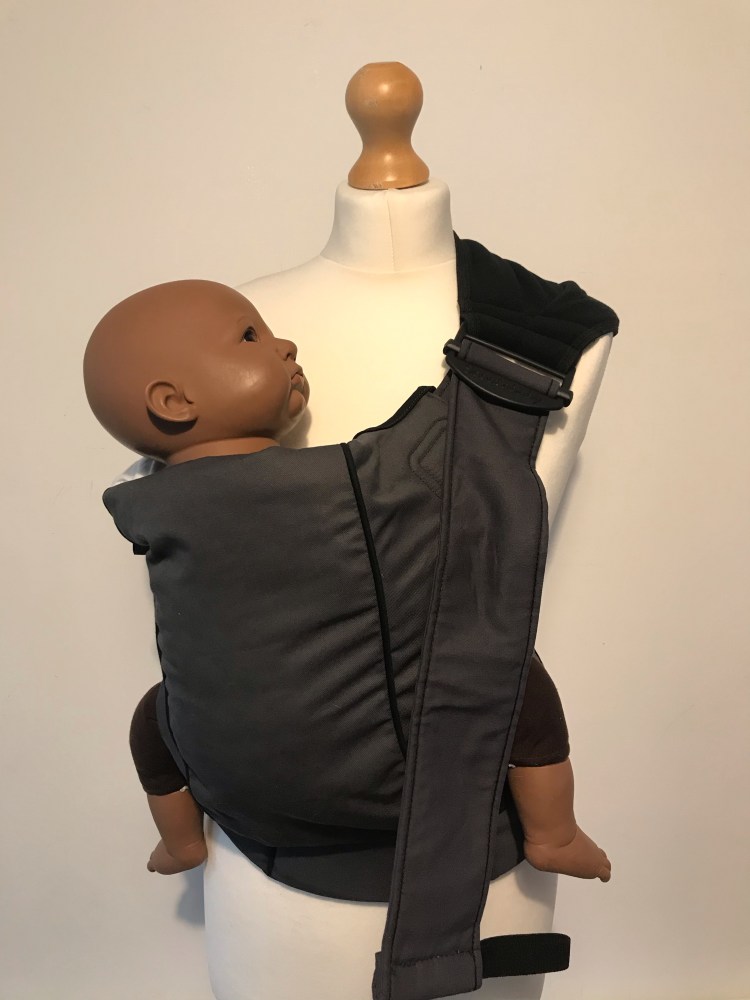
Some carriers are dedicated to hip carrying like the Scootababy and have 1 strap that goes across the body.
Some carriers also offer the facing-out position (or ‘facing away’/’world facing’/’front facing’) (e.g., Ergo Omni/Breeze, Beco Gemini/8, Tula Explore, Ergo Embrace) whereby you can turn your baby facing the world (on your front) to offer them more visibility.
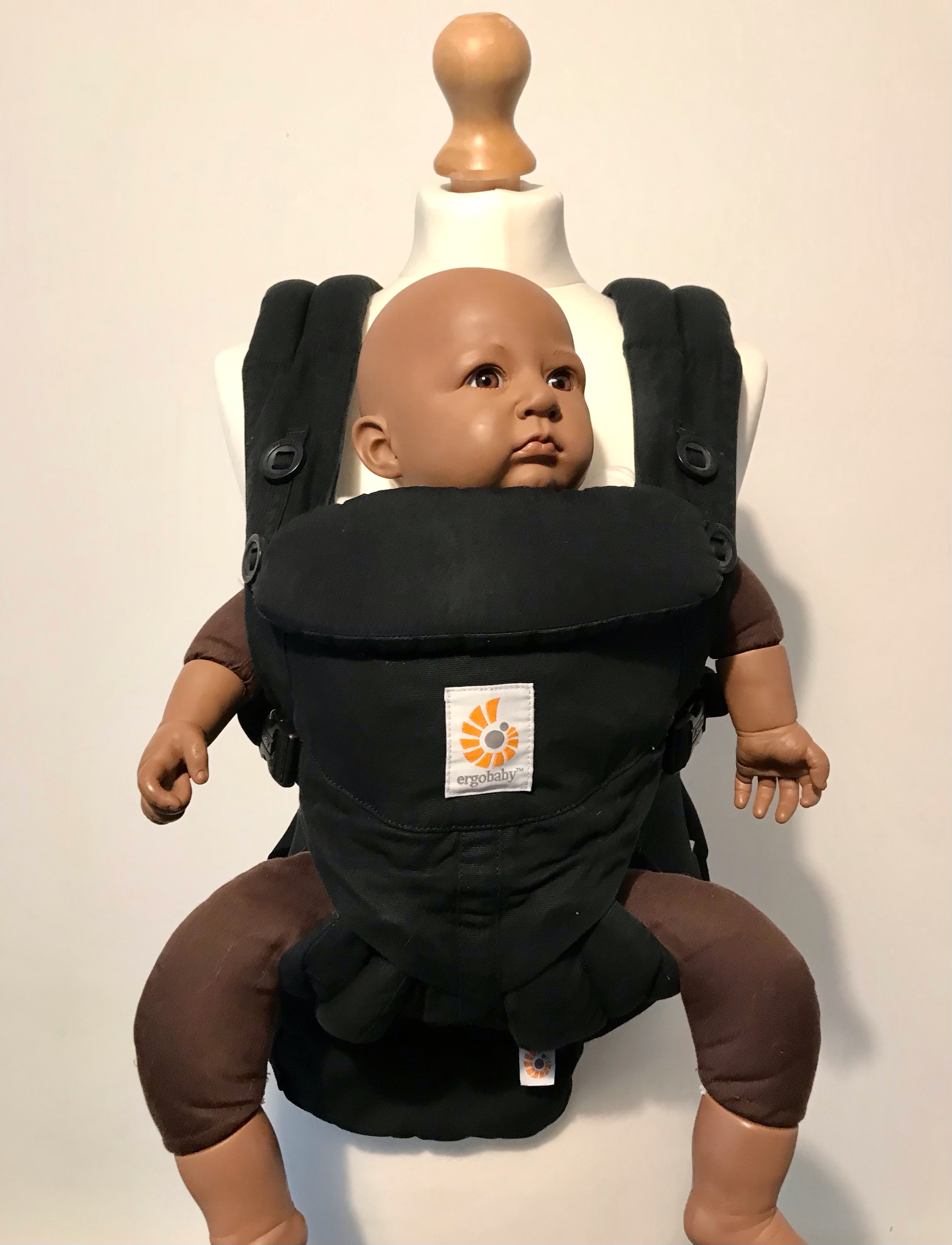


Not all carriers offer this positioning so you need to think about whether you want to carry your baby in this position before buying a carrier. This will really reduce your options and those carriers are quite structured (sometimes may not fit a newborn or small baby well – see above). But good news! You have a sling library with 400+ slings where you can hire anything you want for as long as you want and change carriers as many times as you want so you don’t have to make any tough financial decisions! To carry facing out, you will need a carrier that can be narrowed at the base at an angle so as to continue offering your baby a deep seat (‘M’ shape positioning). This will ensure their weight is well supported when you carry them this way. This can be done from about 5 months old when baby has very good head control and there are some guidelines to respect. You need to monitor your baby at all times and turn them back facing you if they fall asleep (or chin and chest will be touching, increasing the risk of suffocation, turn them back if they become distressed, short amount of times for small babies (20-30mins) to avoid over-stimulation, but also to preserve your back as the weight is shifted forward and bear in mind that by the time your baby is 12-14 months, they will feel too heavy to be carried facing out.
For a more thorough discussion, read my blog about carrying facing out
Breathable vs full cotton fabric carriers
Some carriers are made with lightweight, breathable special ‘solar’ fabric (e.g., Integra Solar – right pic, Boba Air- left pic, Tula Lite) designed for the hot weather.
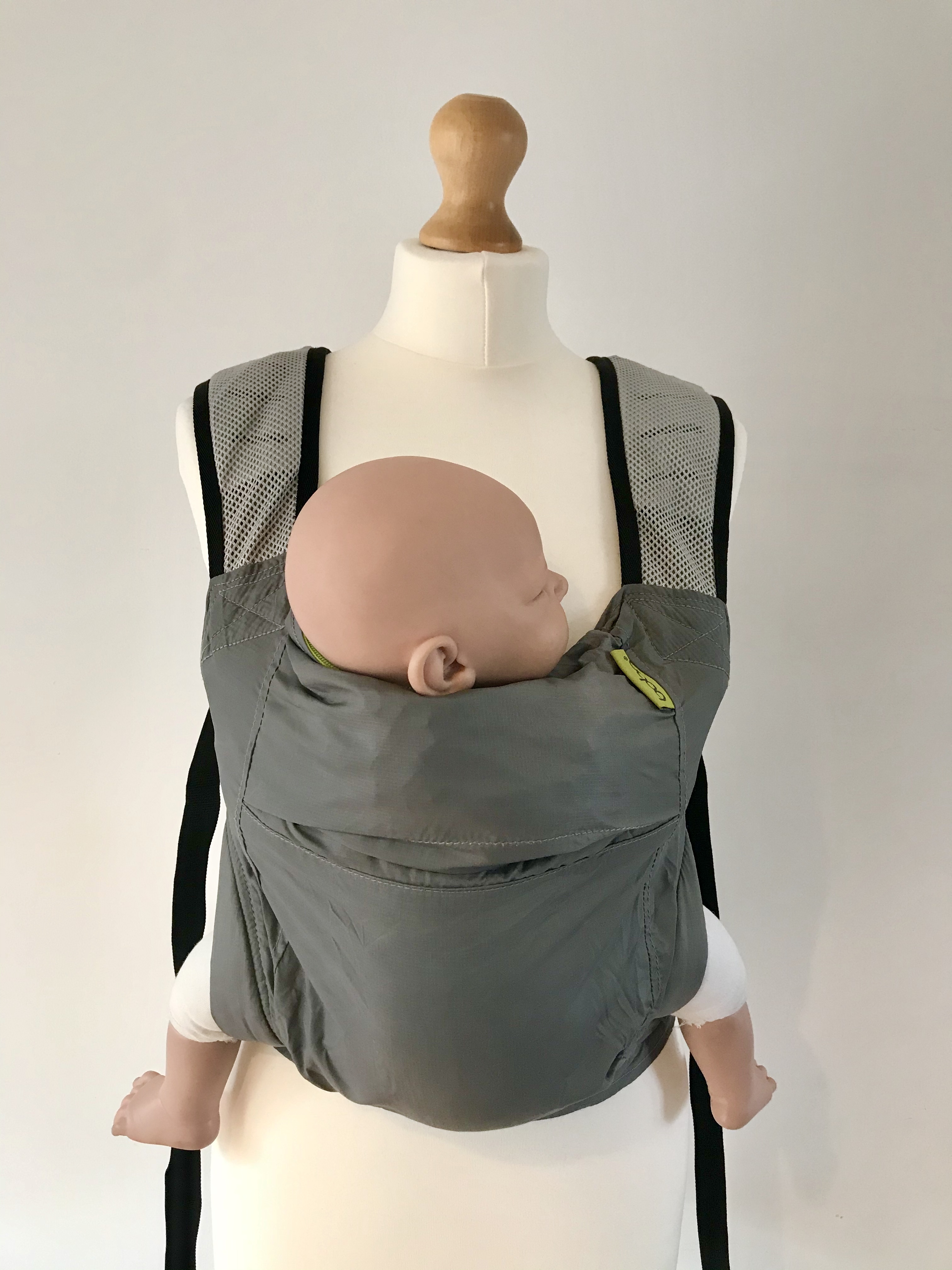

Mesh and solar fabrics are designed to make the carrier feel less heavy, less hot and more breathable especially when the weather gets warm ( a rare sight in the UK!). Babywearing can get a bit sweaty with the close contact of 2 bodies, so choosing a breathable carrier might be a good option for you if you run hot or the weather is hot (or you can hire one for your summer holiday!). It’s completely fine to use a mesh carrier in the cold weather (layer accordingly – here’s my blog about babywearing in the cold weather). Mesh doesn’t feel as soft or snuggly as full cotton, so again, it’s about personal preferences. More info in my babywearing in the hot weather blog.
Well done, you’ve made it to the end of my ‘concise’ guide! I hope this has enlightened you a bit and encouraged you to go to your nearest sling library to try some carriers on! Don’t hesitate to get in touch if you have questions, want to hire a carrier/s or come to the sling library/sling events.
Love, Mel
Help support the sling library! If you have enjoyed this article and would like to support the sling library, you can ‘Buy me Coffee’ All donations go towards supporting parents and keeping the sling library going. Thank you so very much!


